Video transcription

Learn how to transcribe video audio to text from any clip

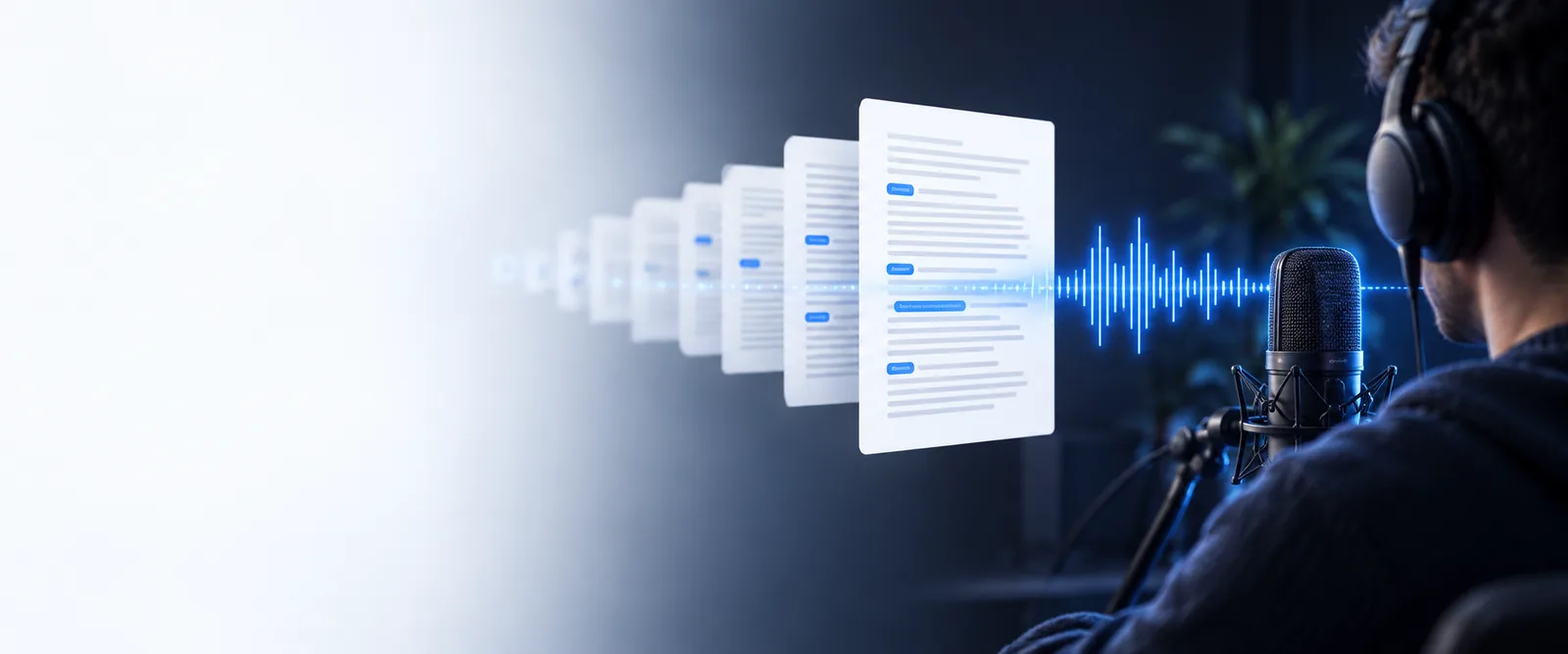
Use this practical guide to transcribe video audio to text, whether your source is a meeting recording, interview, lesson, or social video. Upload the clip, check the import, and refine the transcript for sharing or search.

Free to start · no signup
Video transcription workspace

The video-to-text tool workflow

A reliable conversion starts with a clear source file and ends with a transcript that has been checked against the video.

  1. 1

    Add the video

    Choose the clip from your device and keep the original file available in case you need to compare wording, timing, or speaker changes.

  2. 2

    Let the speech process

    The tool separates spoken content from the visual track and produces editable text. Longer clips may take more time, especially with background noise or several speakers.

  3. 3

    Review and use the transcript

    Scan names, numbers, punctuation, and speaker turns before copying the result into notes, captions, a document, or a searchable archive.

Import steps for common video sources

The best import approach depends on where the video came from and what you need to preserve in the final text.

Source video Transcript result
Primary content Spoken dialogue, narration, interviews, or lessons Words arranged as editable text
Visual information Slides, demonstrations, faces, and on-screen actions Not automatically represented in the transcript
Audio track May include music, room noise, or multiple voices Speech is retained; non-speech sounds may need manual notes
Speaker changes Clear turns are easier to identify when voices do not overlap Review labels and paragraph breaks before publishing
Timestamps Useful when the video must be referenced at exact moments Add or retain timing when captions or editing are required
Output use Meetings, interviews, tutorials, webinars, and clips Notes, captions, summaries, quotes, or searchable records

Common video-to-text workflows

Different viewers need different levels of cleanup after import, but each workflow benefits from a quick accuracy review.

Researchers

A recorded interview contains detailed answers that need to be searched and quoted.

A readable transcript makes themes, names, and passages easier to locate. For an audio-only source, use the [transcribe audio recording to text](/audio-recording-to-text/) workflow instead.

transcribe audio recording to text

Content teams

A short video needs a written version for a blog draft, social post, or internal review.

The transcript creates a starting point for editing while the original clip remains available for fact checking. If the soundtrack is exported first, try the [mp3 audio to text converter online free](/mp3-audio-to-text/) option.

mp3 audio to text converter online free

Teachers and students

A lecture or tutorial needs notes that can be scanned after class.

Text makes key explanations easier to revisit, annotate, and organize alongside course materials. Keep visual demonstrations separate from the spoken transcript.

audio to text online

Support and operations teams

A training or product video must be turned into an internal reference.

A reviewed transcript gives colleagues a searchable record of procedures, decisions, and recurring questions. Mark uncertain words before circulating it.

audio to text online

Skip manual replay and start with a clean transcript you can edit, search, and share. Upload the video, review the wording against the source, then shape the result for notes, captions, or documentation.

Turn your next video into usable text

  • Works with spoken video content
  • Useful for notes, captions, and quotes
  • Review names and numbers before publishing
Transcribe my video

Video audio-to-text FAQ

These answers cover the practical questions people ask before converting spoken content from a video.

Upload the video to an audio-to-text tool and let it process the spoken track. Then review the transcript for names, punctuation, speaker changes, and words affected by background noise.

Yes, a video-aware workflow can accept the clip directly and work from its audio track. If your tool only accepts audio, export the soundtrack first and use an MP3 or another supported audio file.

The available formats depend on the tool and its importer, so check the upload area before preparing the file. If a format is rejected, convert a copy to a commonly supported video type or extract its audio.

Accuracy depends on sound quality, accents, overlapping voices, technical terms, and background noise. Always compare important names, figures, quotations, and instructions with the original video before sharing the transcript.

Some workflows preserve timing or suggest speaker turns, but these details still need review. For interviews and meetings, separate paragraphs by speaker and verify each label against the recording.

Start converting
Start converting